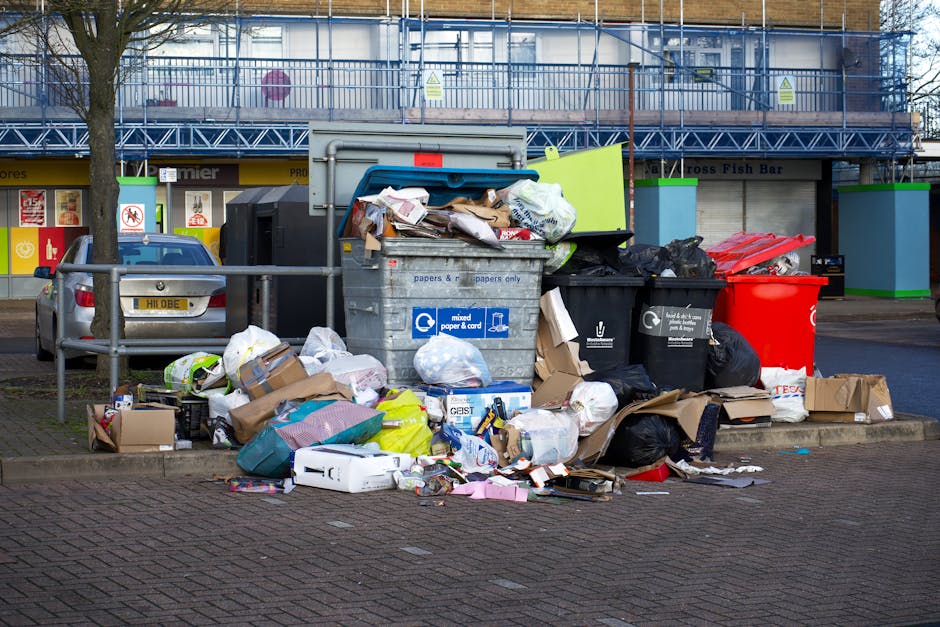
Brentwood CM14 bulky rubbish charges what to expect: a practical guide before you book
If you are trying to work out Brentwood CM14 bulky rubbish charges what to expect, you are probably at that slightly annoying point where the stuff has piled up, the room feels smaller than it should, and you just want a straight answer. Fair enough. Bulky waste collection can be simple in practice, but the price you pay often depends on what you are moving, how much there is, and how easy it is to collect.
This guide breaks the subject down in plain English. We will look at how bulky rubbish charges are usually structured, what affects the cost, what to ask before booking, and how to avoid those awkward extras that show up later. You will also find a comparison table, a checklist, and a realistic example so you can judge whether a quote feels sensible rather than just guessing. To help you explore related services, you may also find it useful to look at London rubbish removal services, waste clearance services, and house clearance options if your job is bigger than a single bulky item.
Let's face it, nobody wants a vague quote and a surprise on the day. A good service should make the costs easy to understand before anyone turns up.
Why Brentwood CM14 bulky rubbish charges what to expect matters
Bulky rubbish looks straightforward from the outside. A sofa, a mattress, a broken wardrobe, maybe an old treadmill hiding in the garage like it owns the place. But the charge is rarely just about the item itself. In Brentwood CM14, what you end up paying usually reflects labour, access, disposal route, vehicle space, and how quickly the job needs doing.
That matters for two reasons. First, it helps you budget properly. Second, it helps you compare quotes on a like-for-like basis instead of comparing one company's all-in price with another company's teaser rate. They are not the same thing, and to be fair, that is where a lot of confusion starts.
It also matters because bulky rubbish is one of those jobs where the cheapest quote is not always the best value. If a collection crew cannot safely remove a heavy item from a first-floor flat, or if they charge extra for stairs, access, or mixed waste, the final bill can climb quickly. A clear expectation upfront saves time, reduces stress, and usually avoids that awkward "oh, that will be extra" conversation at the kerb.
If you are planning a larger clear-out, it can help to think in stages. Some households only need a one-off removal, while others are better served by a broader service such as property clearance or commercial waste disposal if the waste is from a business or managed premises. Different jobs, different pricing shape.
How Brentwood CM14 bulky rubbish charges what to expect works
Most bulky waste pricing follows a simple logic: the more time, space, labour, and disposal cost involved, the higher the price. That sounds obvious, but in real life the details matter a lot.
Here is the usual breakdown you can expect:
- Item type: A sofa is different from a broken fridge, and both are different from a pile of mixed household junk.
- Volume: Many services quote by load size, weight, or the amount of van space used.
- Access: Ground-floor easy access is quicker than carrying furniture down narrow stairs or through a rear alley.
- Special handling: Appliances, awkward furniture, or heavy objects may need extra labour or disposal care.
- Timing: Same-day or short-notice collection can cost more than a flexible booking.
- Location: Travel distance, parking restrictions, and local logistics can influence the price.
Some people assume bulky waste charges are fixed and universal. They usually are not. A two-seater sofa picked up from a driveway at 9 a.m. is a different job from the same sofa carried down two flights of stairs during school-run traffic. The work may look identical on paper, but the effort is not.
In many cases, you will receive an estimate after describing the items, sending photos, or listing them over the phone. Good operators prefer clear photos because they reduce guesswork. If the company offers a quote after seeing the waste, that is often more reliable than a rough ballpark delivered with no context.
For broader removals, it is worth comparing the scope of service too. A simple pickup may suit one-off household junk, while a larger project may fit better with garage clearance or garden waste removal if the mess has spread outdoors. Different waste streams, different handling.
What usually changes the final price
These are the usual variables that move a quote up or down:
- Quantity: One item versus a full room clear-out.
- Weight: Especially relevant for dense materials, old appliances, or mixed waste.
- Sort time: Mixed rubbish takes longer to separate from reusable or recyclable items.
- Distance and parking: If the van cannot park close by, labour increases.
- Disposal requirements: Some items require specific processing routes.
Truth be told, the best quote is usually the one that clearly explains what is included. If a price sounds unusually low, ask what happens if the load turns out bigger than expected. A good answer is specific. A vague one... not so much.
Key benefits and practical advantages
Understanding what to expect from bulky rubbish charges is not just about saving a few pounds. It also helps you make a cleaner, calmer decision. That sounds a bit dramatic for rubbish, maybe, but anyone who has had a hallway blocked by an old sofa knows the feeling.
Here are the main advantages of approaching it properly:
- Better budgeting: You can plan the real cost instead of reacting to surprises.
- Faster turnaround: If details are clear, bookings tend to move more smoothly.
- Fewer disputes: Clear scope means fewer misunderstandings about extras.
- Safer handling: Heavy and awkward items are removed with the right approach.
- More suitable service choice: You can tell whether you need a one-off collection or a larger clearance.
There is also a hidden benefit: it helps you avoid over-ordering capacity. If you only need two bulky items moved, a full-scale clearance service may be more than you need. On the other hand, if you are clearing a garage, loft, or an entire flat, a tiny one-item collection could end up costing more in separate visits. Matching the service to the job is where the savings usually sit.
For anyone dealing with multiple property spaces, such as rental turnovers or office changes, browsing office clearance and rental property clearance can give you a better sense of the kind of bundled support that may make sense.
Who this is for and when it makes sense
This topic matters to a surprisingly wide range of people. It is not just for someone throwing out an old mattress. In practice, bulky rubbish charges affect homeowners, tenants, landlords, letting agents, businesses, tradespeople, and families dealing with a clear-out after a move or refurbishment.
It makes sense to look closely at the charges if you are:
- clearing out a spare room, loft, shed, or garage;
- replacing furniture and need the old items removed;
- managing a landlord void or end-of-tenancy clean-up;
- dealing with bulky packaging after a renovation or delivery;
- trying to avoid multiple trips to a disposal site;
- sorting out mixed rubbish that is too much for normal household bins.
It also makes sense if your time is limited. Some people could technically hire a van, do the lifting, and make the trip themselves. But if you are juggling work, children, parking, and a hard-to-move wardrobe that squeaks every time it shifts, the convenience of a booked collection can easily outweigh the effort of doing it yourself.
One useful rule of thumb: if the item is large, awkward, or likely to need more than one person to move safely, it is worth getting a proper quote rather than assuming it will be cheap because it is "just one thing." That is how budgets get derailed.
Step-by-step guidance
If you want a smooth, low-stress experience, the process is usually simpler than it first appears. Here is the most practical route.
- List everything you want removed. Be honest. Count the extras in the corner too, even the "I forgot about that" pile.
- Take clear photos. Include size, condition, and access points if possible.
- Ask what the quote includes. Check labour, disposal, VAT if applicable, and any access-related charges.
- Confirm timing. Same day, next day, or planned collection? It affects price and logistics.
- Check what cannot be taken. Some items need special handling or separate arrangements.
- Prepare the items. Move them to a place that is easy to reach if you can do so safely.
- Ask about proof of disposal. A reputable provider should be able to explain how waste is handled responsibly.
A small example: say you are clearing a two-seater sofa, a broken bedside cabinet, and a flat-packed wardrobe box filled with old packaging. A good quote should account for the actual space and lifting effort, not just the number of items. If the provider only asks "how many things?" and nothing else, that is a clue they may be pricing loosely.
Useful planning helps too. If you are already in the middle of a home tidy-up, combining the booking with a broader furniture disposal or single item collection approach can sometimes be more efficient than arranging separate visits. Not always, but often enough to be worth checking.
Expert tips for better results
Here is where a little experience saves a lot of hassle. The biggest difference usually comes from preparation, clarity, and asking the right questions before the van arrives.
- Send photos in daylight. Dark garage snapshots are rarely helpful. Bright, clear images make quoting easier.
- Measure awkward items. Stairs, doorways, and tight hallways matter more than people think.
- Separate obvious recycling. If the waste stream is mixed, the job can take longer.
- Be clear about access. Tell the provider about parking restrictions, flats, lifts, or long walks from the kerb.
- Ask what happens on the day if the load changes. That one question can prevent a messy debate later.
There is also a timing tip that people often overlook. If you are flexible, a collection arranged for a less pressured slot may be easier to complete and sometimes easier on the price. Early morning can be ideal because parking is simpler and the street is quieter. By late afternoon, especially on a busy road, everything becomes a bit more fiddly.
Expert summary: The best bulky rubbish booking is the one with clear photos, a written scope, and honest access details. That is what keeps the price stable and the day uneventful - which, frankly, is exactly what you want.
If your project involves a garden tidy, a shed full of leftover materials, or post-renovation waste, you may also want to compare the scope with bin collection services and general rubbish disposal so you know which route fits best.
Common mistakes to avoid
Most pricing problems come from one of a handful of avoidable mistakes. None of them are dramatic on their own, but together they can turn a simple collection into a headache.
- Guessing the load size: "About a van load" is too vague if you want a serious quote.
- Forgetting access issues: Stairs, lifts, distance, and parking all matter.
- Assuming all waste is the same: Mixed household waste, furniture, and appliances may be priced differently.
- Ignoring extra items: One forgotten chair can alter the load more than you expect.
- Not checking the service scope: Some services include loading and disposal, others add extras.
- Booking without asking about timing: The cheapest slot may not suit your schedule, and a rush job can cost more.
Another quiet mistake is underestimating the emotional side of a clear-out. People often start with one sofa and end up tackling a decade of clutter. That is normal, by the way. It happens all the time. But it means your original quote may no longer fit the real job. If the clear-out expands, say so early.
One more thing: don't leave heavy items in a position that creates a lifting risk just to "make it easier" for the crew. If it is unsafe, let them know. Good operators would rather adjust the plan than force a bad lift. Sensible, really.
Tools, resources and recommendations
You do not need fancy kit to plan a bulky rubbish collection, but a few simple tools make the process smoother and improve quote accuracy.
- Phone camera: Take wide shots and close-ups of the items.
- Tape measure: Useful for sofas, wardrobes, mattresses, and tight access points.
- Quick notes app: Jot down item counts and any restrictions.
- Basic floor plan or rough sketch: Helpful for flats, offices, or tricky access.
- Sorting bags or boxes: Good for separating smaller loose waste from larger pieces.
If your waste is part of a bigger clear-out, you might benefit from looking at related services such as end of tenancy clearance, flat clearance, or loft clearance. Those pages can help you judge whether your job is really a single collection or a wider clearance project.
Recommended approach? Keep your information simple, honest, and complete. The more accurate your first message or call, the more useful the response will be. Old-fashioned, maybe. Effective, definitely.
Law, compliance, standards, or best practice
For waste removal in the UK, the key point is straightforward: bulky rubbish should be handled responsibly and disposed of through appropriate, lawful channels. You do not need to become a waste-law expert to book a collection, but it does help to understand the basics.
Best practice usually means:
- using a provider that can explain how waste is collected and managed;
- avoiding anyone who is vague about disposal;
- keeping records of the booking, especially for business or landlord jobs;
- making sure hazardous or specialist items are declared up front;
- not mixing prohibited items into a general bulky waste load without checking first.
If you are a landlord, agent, or business owner, the standards around record-keeping and due care become even more important. Waste duty of care is not something to hand-wave away. In plain terms, you want confidence that your rubbish is going where it should and that you have a paper trail if needed.
There is also a practical safety angle. Large or heavy items can cause damage if they are dragged, dropped, or carried badly. Reputable crews tend to plan the lift, protect walls where needed, and avoid rough handling. That is not just about professionalism. It is about avoiding chipped paint, scratched floors, and those little regrets that are somehow always more annoying than the original clutter.
Options, methods, or comparison table
Different removal methods suit different situations. If you are deciding how to handle bulky rubbish in Brentwood CM14, this comparison can help narrow it down.
| Option | Best for | Typical advantages | Things to watch |
|---|---|---|---|
| Single item collection | One sofa, mattress, appliance, or similar item | Simple, quick, usually easy to arrange | May be less efficient if the job grows |
| Bulky waste collection | Several large items or mixed bulky rubbish | Good balance of convenience and cost | Pricing can vary with access and volume |
| Room or property clearance | Lofts, garages, flats, rentals, offices | Suited to bigger jobs, saves multiple bookings | Needs more planning and clearer scope |
| DIY disposal | Small loads, flexible schedules, confident lifters | Can be cheaper if you already have transport | Time, fuel, parking, lifting, and site rules all add up |
In many real-world cases, the decision comes down to convenience versus control. DIY can look cheap at first, then you factor in a van, loading time, fuel, and your Saturday afternoon disappearing. A booked collection often costs more on paper, but saves the hassle. Sometimes that balance is exactly right.
Case study or real-world example
Here is a realistic example. A household in CM14 is replacing a sofa, two armchairs, and a damaged bedside cabinet. At first glance, that sounds straightforward. But there is a narrow hallway, one item needs to come down stairs, and parking is a bit tight because the road gets busy after school drop-off.
The first rough estimate they receive is based only on item count. It sounds fine. Then they send photos, including the access route, and the quote is refined to reflect the extra labour and time. Nothing dramatic, just more accurate. That is the point.
What changed?
- The crew needed more room to manoeuvre the sofa.
- Access from the property to the vehicle was longer than expected.
- The collection had to be timed around parking pressure on the road.
Because the customer shared those details early, the job stayed on track. No surprise add-ons, no tension, no "we'll have to reschedule because we didn't know" moment. Just a tidy pickup and a cleaner room by lunchtime. Simple. That is how it should feel.
This kind of example is exactly why detailed quoting matters. The item list matters, yes. But the route, the steps, the corners, the parking space outside - they matter too.
Practical checklist
Use this checklist before you book so you know what to expect and can compare quotes properly.
- Have I listed every bulky item I want removed?
- Have I taken clear photos from different angles?
- Have I measured any awkward items or tight access points?
- Have I confirmed whether the quote includes labour and disposal?
- Have I asked about stairs, parking, or access-related charges?
- Do I know whether the provider can handle mixed waste or only certain items?
- Have I checked if the booking can be done on my preferred day?
- Have I asked what happens if the load changes on arrival?
- Do I know whether I need a single-item service or a fuller clearance?
- Have I kept a copy of the quote or booking confirmation?
If you can tick most of those off, you are already ahead of many people. Honestly, that little bit of preparation makes the whole thing feel easier.
Conclusion
When you are trying to understand Brentwood CM14 bulky rubbish charges what to expect, the main thing to remember is that price follows the real effort involved. Size, weight, access, timing, and disposal needs all shape the final figure. Once you know that, quotes become much easier to judge.
The best approach is simple: describe the job properly, share photos, ask what is included, and make sure the service matches the scale of the waste. Whether you are clearing one awkward item or a whole room of old furniture, a clear quote and a sensible plan will save time and hassle. And, let's be honest, peace of mind is worth a fair bit when your hallway is full of stuff you no longer want.
Get a free quote today and see how much you can save.
If you take anything from this guide, let it be this: a good bulky rubbish booking should feel straightforward, not stressful. Clear information in, clear price out. Nice and simple.
Frequently Asked Questions
What affects bulky rubbish charges in Brentwood CM14 the most?
The biggest factors are usually the amount of waste, the type of items, access to the property, and how much labour is involved. Stairs, long carries, or awkward items can increase the price because the job takes longer and needs more effort.
Are bulky rubbish charges usually fixed or quoted case by case?
They are often quoted case by case. Some services may have starting prices, but a final quote usually depends on what you need removed and how easy it is to collect. Photos and item lists help make the estimate more accurate.
How can I avoid hidden extras on a bulky waste quote?
Ask exactly what is included. Check whether labour, disposal, access issues, and VAT if applicable are part of the price. It also helps to be upfront about stairs, parking, and any items you might have forgotten at first.
Is it cheaper to remove bulky rubbish myself?
Sometimes, yes, but not always. DIY disposal can save money if you already have transport and the items are easy to lift. Once you add fuel, time, parking, and disposal effort, the saving can shrink quickly.
Can I get a quote from photos only?
Yes, many providers can estimate from photos, and that is often one of the easiest ways to get a useful price. Clear images from a few angles are much better than a quick description like "a few bits and bobs."
What counts as bulky rubbish?
Bulky rubbish usually means large household or commercial items that do not fit in normal bins, such as sofas, beds, wardrobes, appliances, or large pieces of general junk. The exact handling can vary depending on the provider and the item type.
Do stairs or difficult access really change the price that much?
They can. Carrying heavy items down stairs or through narrow spaces takes more time and sometimes more than one person. That extra labour is often reflected in the quote.
Should I choose single-item collection or a full clearance service?
If you only have one or two items, a single-item collection may be the better fit. If you are clearing a garage, loft, flat, or mixed household waste, a fuller clearance service is often more practical and can work out better value overall.
What should I do before the collection team arrives?
Make sure the items are accessible, separate anything you do not want taken, and check that parking or entry arrangements are clear. If possible, keep the route free of trip hazards. That small bit of prep makes a real difference.
Can bulky waste include appliances like fridges or washing machines?
Often yes, but appliances may be handled differently because of their size, weight, or disposal requirements. Always mention appliances when asking for a quote so the provider can price them correctly.
What is the safest way to compare bulky rubbish quotes?
Compare like for like. Look at what is included, how the provider handles access issues, and whether the quote covers all disposal costs. The lowest number on the page is not always the best value if the scope is incomplete.
Is bulky rubbish removal useful for landlords and agents?
Very much so. It can be a practical way to clear leftover furniture, tenant waste, or abandoned bulky items between tenancies. It also helps when a property needs to be turned around quickly and kept presentable.